
Historical Sites in Kenya: Top Places You Must Visit
 By Axel Donovan
| Update on: Apr 07, 2026
By Axel Donovan
| Update on: Apr 07, 2026
Kenya is commonly praised due to its impressive wildlife and natural scenery, yet it also has an impressive and fascinating historical heritage. Kenya’s past is reflected in stories of human civilization, trade, and culture that can be traced in ancient coastal towns impacted by Swahili and Arab traders and inland fortresses, colonial buildings, and important archaeological sites.
These attractions demonstrate the varied history of the nation impacted by the local inhabitants, early human evolution, international trade, and periods of colonization. A visit to the historical sites of Kenya will provide travelers with a better appreciation of the Kenyan nation beyond its famous safaris and beaches. This is our guide to the top 13 historical sites in Kenya, showcasing remarkable places that hold centuries of history, architecture, and tradition, and that must be on the itinerary of any history lover and any culturally curious traveler.
- Top 13 historical sites in Kenya that shaped the nation
- Fort Jesus, Mombasa
- Gedi Ruins, Watamu
- Lamu Old Town
- Koobi Fora, Lake Turkana
- Thimlich Ohinga, Migori
- Karen Blixen Museum (Nairobi)
- Olorgesailie Prehistoric Site
- Shimoni Slave Caves, Kwale
- Jumba la Mtwana
- Lord Egerton Castle, Nakuru
- Hyrax Hill Prehistoric Site, Nakuru
- Kit Mikayi
- Vasco da Gama Pillar (Malindi)
- Essential tips for exploring Kenya’s ancient ruins and monuments
- Conclusion
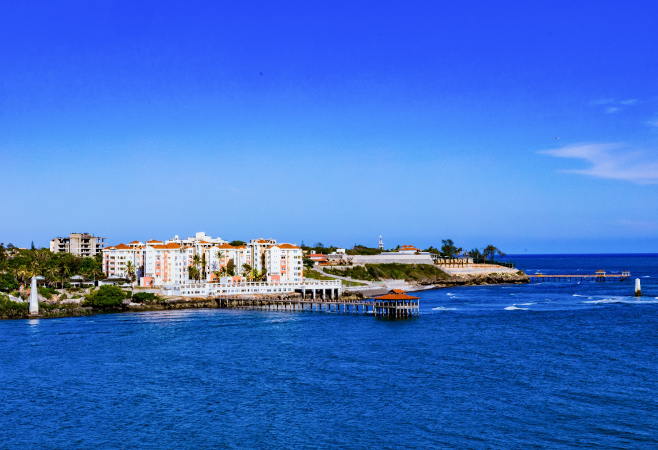
Coastal heritage, sacred forests, and Swahili trade sites
Top 13 historical sites in Kenya that shaped the nation
Kenya is a land of remarkable natural beauty that offers visitors a truly memorable travel experience. In addition to the well-known fauna and the opportunity to see the Big Five, the country is also home to many significant historical and heritage sites. Kenya possesses several UNESCO World Heritage sites, indicating its great culture, ancient civilization, and varied traditions. These landmarks are closely connected to various cultural events in Kenya and reflect many facts about Kenya Africa that highlight the country’s rich and diverse heritage. Together, these sites provide valuable insight into Kenya’s past and its contributions to African and global history.
The list of 13 historical sites in Kenya presented below provides an exciting glimpse into the heritage of the country.
Fort Jesus, Mombasa
Fort Jesus is one of Kenya’s most famous historical sites and stands as a powerful symbol of the country’s colonial and maritime history. This is a 16th-century fort situated in Mombasa and constructed by the Portuguese in 1593 to secure their trade routes in the Indian Ocean. The fort is often said to resemble the shape of a human figure when viewed from above, reflecting Renaissance military design principles.
Through the centuries, it changed its masters many times between the Portuguese, Omani Arabs, and the British, each leaving a distinct mark on its structure and history. Today, Fort Jesus is a UNESCO World Heritage Site and museum where one can see artifacts, weapons, and displays to unfold the rich maritime and cultural heritage of Kenya.
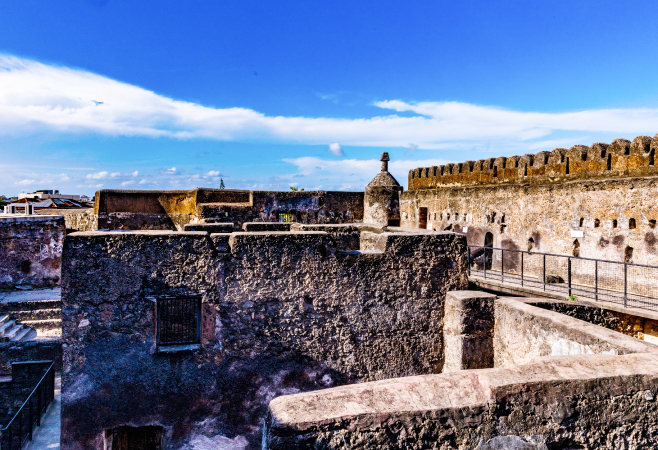
Fort Jesus is a must-see historic landmark that offers a fascinating glimpse into Kenya’s rich cultural and colonial history
Gedi Ruins, Watamu
The Gedi Ruins, located in Watamu, are regarded as one of the most interesting historical sites in Kenya, as they provide an excellent account of the ancient Swahili civilization that once existed along the East African coast. Gedi was a major trading town located in a forest near Malindi between the 12th and 17th centuries that was strongly linked to the Indian Ocean trade routes. The place has excellent remains of stone houses, mosques, a palace, and an advanced water management system, demonstrating the sophisticated urban planning of the city. Visitors can also experience elements of cultural dances in Kenya, which are often performed to showcase Swahili heritage and history.
The town was later abandoned for reasons that are still debated by historians, including environmental changes, shifts in trade routes, and possible social or political pressures. It is set in the middle of greenery and wildlife and offers visitors a combination of history, culture, and nature.
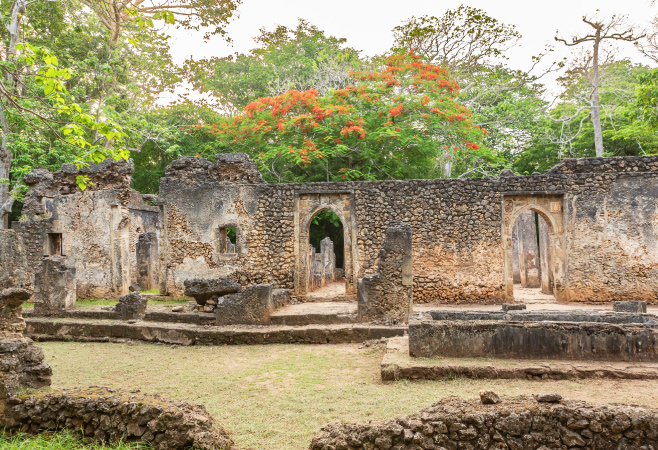
Gede Ruins are the remains of a Swahili town, typical of most towns along the East African Coast
Lamu Old Town
Lamu Old Town is among the most significant places on the list of historical sites in Kenya, renowned for its Swahili architecture and rich cultural heritage. The ancient town is located on Lamu Island along the northern coast of Kenya and has existed for over 700 years, making it one of the oldest continuously inhabited Swahili settlements in East Africa. Lamu Old Town is a culmination of a distinct mixture of African, Arab, Persian, and Indian cultures, which can be traced in small cobblestone streets, coral stone constructions, carved wooden doors, and courtyards. The town is also a center for cultural festivals in Kenya, where traditions are preserved through celebrations and community gatherings.
Lamu has not followed the path of many other modern cities, as it has maintained its traditional way of life, with donkeys remaining the primary mode of transportation. Lamu Old Town, being a UNESCO World Heritage site, is an ideal place to visit, as it provides the visitor with a unique experience of the history of Kenya, Swahili culture, and centuries-old Indian Ocean trade networks.
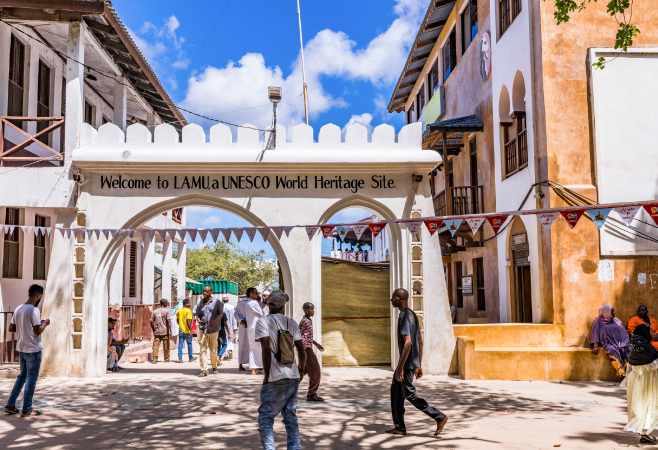
Lamu Old Town, the oldest preserved Swahili settlement in Kenya
Koobi Fora, Lake Turkana
Koobi Fora is an important archaeological site and prehistoric area in Kenya that has played a key role in the study of human evolution. Koobi Fora is situated on the northeastern side of Lake Turkana, a region internationally renowned for its rich fossil record. Koobi Fora has yielded hominin fossils dating back over two million years, including remains attributed to Homo habilis and Homo erectus, as well as some of the earliest stone tools.
Although Koobi Fora itself is not a separate UNESCO World Heritage Site, it lies within the Lake Turkana National Parks, which are UNESCO-listed. Nowadays, Koobi Fora is the place where scientists, researchers, and visitors interested in archaeology, anthropology, and the deep prehistoric roots of Kenya come to visit.
Thimlich Ohinga, Migori
Thimlich Ohinga is among the best historical sites in Kenya, offering a unique insight into the country’s ancient past. This is an outstanding archaeological site that was constructed in the 16th century near Lake Victoria, in Migori County, and is distinguished by dry-stone walls built without the use of mortar. Thimlich Ohinga is widely believed to have been built by early Nilotic-speaking communities, serving both defensive and social purposes.
The location consists of enormous stone walls, small corridors, and open spaces that demonstrate advanced construction skills and sophisticated settlement planning. Thimlich Ohinga is recognized as a UNESCO World Heritage Site and is a strong reminder of the indigenous Kenyan architecture, and remains an important attraction for history enthusiasts and cultural tourists.
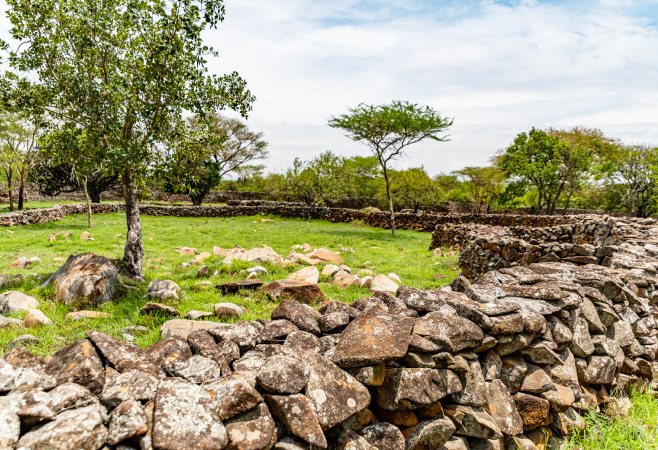
Thimlich Ohinga, a unique stone fortress near Migori, Kenya
Karen Blixen Museum (Nairobi)
The Karen Blixen Museum can be regarded as one of the most popular historical sites in Nairobi, and it allows seeing the historical and literary background of Kenya during the colonial period. The museum is found at the old house of Danish writer Karen Blixen, who spent her life in the farmhouse between 1914 and 1931, where she administered a coffee plantation. Her most renowned work is the memoir Out of Africa, which was later adapted into an award-winning film.
The museum today exhibits such original furniture, photographs, books, and personal items used by Blixen during her life and time in Kenya. Against the picturesque backdrop of the Ngong Hills, the Karen Blixen Museum stands out as one of the most important sites to visit for any tourist seeking to understand the history of the Nairobi people, its literature, and those who travel to learn about its culture.
Olorgesailie Prehistoric Site
The Olorgesailie Prehistoric Site is a heritage site in Kenya that presents some of the significant understanding of early human history. This place in the Great Rift Valley, approximately 70 km southwest of Nairobi, is recognized to have a lot of prehistoric tools, fossils, and ancient evidence of habitation dating back to an estimated time of one million years ago.
Olorgesailie and Acheulean hand axes, in particular, are famous for showing the way ancient man developed his hunting and survival tools. The site is also informative on the issue of climate change and the effects it has on the evolution of humans over the course of thousands of years. Olorgesailie is today an open-air museum and research facility that has attracted archaeologists, historians, and visitors with a keen interest in learning more about the deep prehistoric history of Kenya.
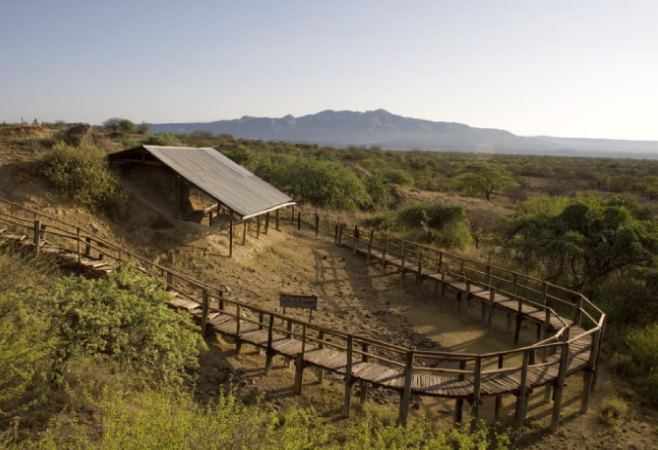
Olorgesailie, a prehistoric site known for ancient stone tools
Shimoni Slave Caves, Kwale
Shimoni Slave Caves form one of the most important historical sites in Kenya, offering insight into the Indian Ocean slave trade. These natural limestone caves, which were found near the coastal village of Shimoni, Kwale County, were utilized in the 19th century mainly as temporary spaces of holding in the period of the Arab and Swahili slave trading network. The caves were used as holding areas where enslaved Africans were gathered before being transported to markets, particularly in Zanzibar.
The caves are a complex of underground rooms and passages that were natural formations. While historical evidence and oral traditions link the caves to the slave trade, some aspects of their use remain debated among historians. Nowadays, guided tours are oriented at explaining the historical background of slavery, trade routes of the coast, and social influence on the life of the local people. Visiting the Shimoni Slave Caves is an educational experience that helps one to reflect on a crucial, painful part of Kenyan history.
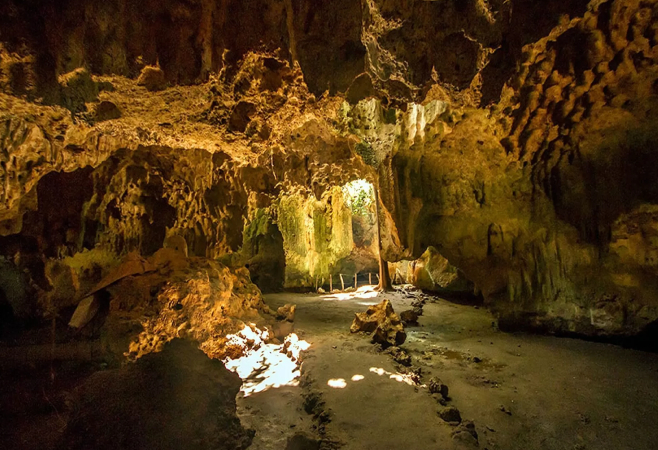
The Shimoni Slave Caves offer a glimpse into the dark history of the East African slave trade
Jumba la Mtwana
Jumba la Mtwana is one of the most intriguing historical sites along the Kenyan coast and a destination that history enthusiasts should not miss. It is an ancient Swahili settlement founded in the 14th century, located just north of Mombasa near Mtwapa Creek. The site preserves coral stone ruins, including mosques, houses, tombs, and courtyards, offering insight into early Swahili architecture and coastal life.
Jumba la Mtwana was a key hub in the Indian Ocean trade network, linking Africa with Arabia and Asia. At its height, it was a prosperous trading town. Today, the ruins are surrounded by lush vegetation and coastal breezes, creating a peaceful setting for exploration. Visiting Jumba la Mtwana allows travelers to step back in time and experience Kenya’s rich Swahili cultural heritage.
Lord Egerton Castle, Nakuru
Lord Egerton Castle is among the top historical attractions in Kenya, known for its unusual history and distinctly European-style architecture. The castle was constructed in the early 20th century by Lord Egerton of Tatton, a British aristocrat who settled in Kenya, in Njoro near Nakuru. According to popular local legend, the castle was built after Egerton was rejected by a woman, although historians consider this story anecdotal rather than a proven fact.
The castle features grand halls, tall towers, and carefully planned gardens, reflecting British colonial architectural influence. Lord Egerton Castle nowadays is being maintained as a national monument and is visited by tourists who are interested in British colonial history in Kenya, architecture, and fascinating personal stories of the Kenyan past.
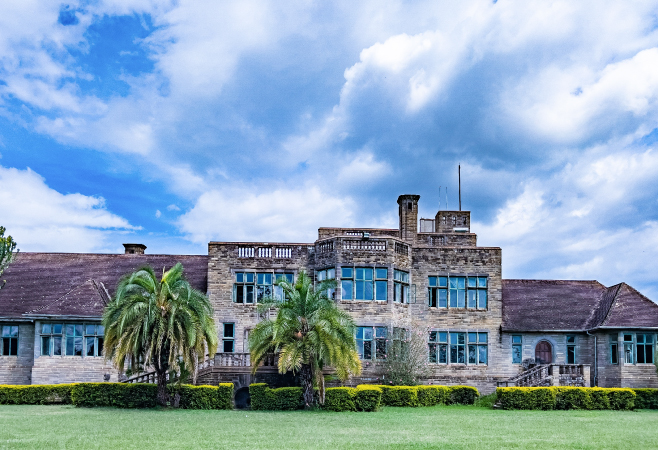
Lord Egerton Castle, a historic mansion with advanced design in Nakuru
Hyrax Hill Prehistoric Site, Nakuru
Hyrax Hill Prehistoric Site is a significant archaeological site that sheds light on Kenya’s ancient human history. The site is located in the Rift Valley near Nakuru and provides valuable evidence of early human habitation, agriculture, and tool-making during the Neolithic period.
Hyrax Hill excavations have provided evidence of stone tools, pottery, and fragments of early structures, which indicate how the prehistoric communities adjusted to their surroundings. The location is also referred to as the rock hyrax site because it is the habitat of a small mammal known as the rock hyrax. Modern Hyrax Hill has a small museum which exhibits artifacts found on excavations and information about early Rift Valley cultures. It is an essential tourist site in Kenya among people interested in history and lovers of archaeology.
Kit Mikayi
Kit Mikayi is one of Kenya’s well-known historical and cultural sites, closely linked to the traditions and religious beliefs of the Luo community. This is a natural formation of dramatic landscape and sacred nature situated near Kisumu in western Kenya, and is composed of huge boulders arranged naturally on top of one another. Over the years, Kit Mikayi has served as a ritual center, prayer site, and community meeting place, especially during times of drought or important life events.
A local legend, which is quite popular, links the rocks to the spirits of their ancestors, and elders continue to visit the site to perform traditional ceremonies. During such rituals, locals often wear Kenya clothing traditional, reflecting their identity and spiritual beliefs. Besides the cultural significance, Kit Mikayi also has beautiful scenery of the surrounding countryside, thus making it an important tourist site of interest in Kenyan history, folklore, and traditional lifestyles.
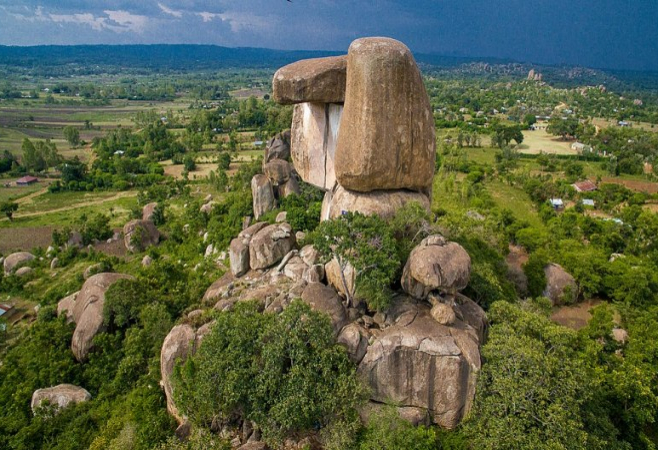
Visitors come to pray, perform rituals, and take oaths
Vasco da Gama Pillar (Malindi)
The Vasco da Gama Pillar in Malindi is a very important historical site on the Kenyan coast and a symbol of early European exploration in East Africa. Erected by the Portuguese expedition led by Vasco da Gama in 1498, the pillar was put up to commemorate his journey to India and his arrival at Malindi.
The monument is located on a coral rock in the Indian Ocean, highlighting Malindi’s historical connection with Portuguese traders. The pillar is topped with a cross, symbolizing the spread of Christianity during that era. This influence can still be seen today in religious landmarks, including some of the richest churches in Kenya across the country. The Vasco da Gama Pillar is currently a leading tourist destination, offering breathtaking ocean views and valuable insight into Kenya’s maritime and colonial history.
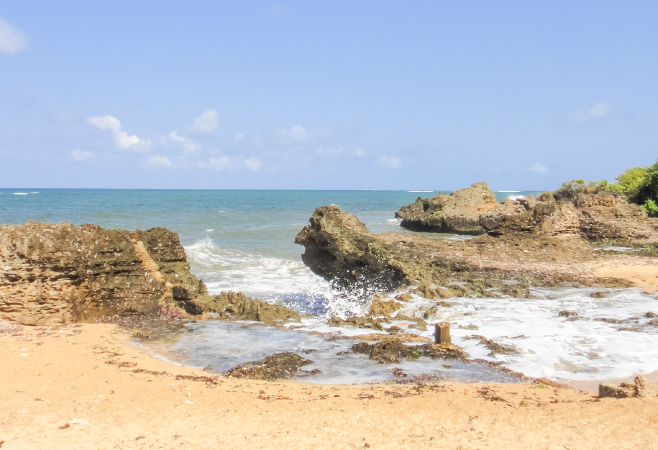
Vasco da Gama Pillar, an iconic coastal landmark in Malindi
Essential tips for exploring Kenya’s ancient ruins and monuments
To make the most of your journey while exploring historical sites in Kenya, here are essential tips to ensure a respectful, meaningful, and enjoyable experience:
- Research in advance: Learn the history of key sites like Fort Jesus or Gedi Ruins to better appreciate their cultural significance.
- Hire local guides: Gain deeper insights and support local communities through guided tours.
- Dress respectfully: Wear modest clothing and follow local customs, especially at religious sites.
- Visit early: Avoid crowds and heat while enjoying a peaceful atmosphere and better photos.
- Carry essentials: Bring water, sunscreen, a hat, and comfortable shoes for outdoor exploration.
- Respect heritage sites: Do not damage, climb, or remove anything from protected areas.
- Check fees and hours: Confirm opening times and payment methods before visiting.
- Plan nearby attractions: Combine historical visits with beaches, parks, or forests.
- Keep identification handy: Carry a passport copy and valid visa when required.
- Be mindful with photos: Ask permission and follow photography rules at sensitive locations.
Conclusion
In conclusion, historical sites in Kenya offer a fascinating journey through the country’s rich past, from ancient Swahili settlements to colonial landmarks and sacred cultural sites. Exploring these destinations provides deeper insight into Kenya’s heritage and traditions. To enjoy your trip smoothly, remember to prepare your travel documents in advance, including applying for an ETA Kenya, allowing you to focus on discovering the country’s remarkable historical treasures.
Related Articles
- Distance from Tanzania to Kenya: Flight & Road Guide
- Pakistan to Kenya Distance: Routes, Flights & Tips
- Kenya Travel Updates 2026: Key Changes International Travellers Should Know
- Kenya to Nigeria Distance: Flights, Time and Routes
- Distance from Kenya to India: Complete Travel Guide
- Kenya Trip Cost From India: Complete Budget Guide for Indian Travelers
- Kenya Safari Packages from UAE: Prices, Itineraries & Travel Guide
- Traveling from Australia to Kenya: Complete Guide

 NEED HELP 24/7
 United States
  United Kingdom
  Singapore
  Viber
Viber 


